Middle East conflict spreads to Lebanon after Israeli strikes against Hezbollah
02/03/2026 | Internacional
After being spared for two days by the US-Israeli war on Iran, which broke out on the morning of Saturday 28 February, Lebanon was finally caught up in the conflict at dawn on Monday 2 March. The Israeli army launched extensive raids on several areas of the country after rockets claimed by Hezbollah fired at northern Israel. The Lebanese Shiite movement was carrying out retaliation for the murder of Supreme Leader Ali Khamenei.
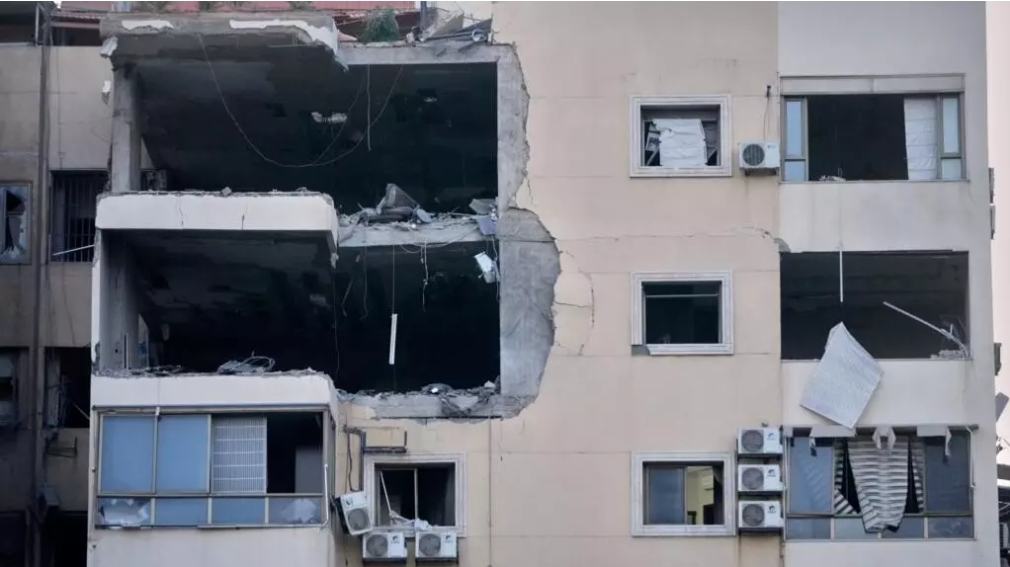
The most violent strikes targeted the southern suburbs of Beirut at dawn on Monday 1 March, hit by a large number of air-to-surface missiles, reports our correspondent in Beirut, Paul Khalifeh. The powerful blasts echoed throughout the capital and shook the walls on its outskirts, reviving memories of the last war between Israel and Hezbollah in the fall of 2024.
According to a provisional toll released by the Lebanese Ministry of Health, the Israeli strikes killed at least 31 people and wounded 149. About 15 localities south and north of the Litani River have also been subjected to air attacks or artillery and tank fire. The Israeli offensive began at dawn, two hours after several projectiles were fired at northern Israel from Lebanon.
Hezbollah claimed responsibility for the fire, which announced in a statement that it had launched a salvo of long-range missiles and a squadron of drones at targets south of the city of Haifa, to avenge the death of Iranian Supreme Leader Ali Khamenei.
The Lebanese Shiite politico-military group has maintained organic ties with the Islamic Republic since its creation. Giant portraits of Ali Khamenei have been displayed for decades on Hezbollah's strongholds in Lebanon.
Hezbollah is nevertheless considered to be very weakened by its military confrontation with Israel since 2024. It was militarily crushed and its main leaders were killed. So much so that the politico-military group had to make a crucial choice with the war launched by the United States and Israel against Iran: stay away or get involved, at the risk of plunging Lebanon and its population into war once again. It is this second scenario that has been unfolding for a few hours.
Israel to 'intensify' strikes
For his part, the Israeli chief of staff, Lt. Gen. Eyal Zamir, said on Sunday night that residents of northern Israel have been informed that strikes in Lebanon will continue for at least a few days. In this context, the Israeli army has issued an evacuation order to the inhabitants of about fifty villages in southern Lebanon and the eastern Bekaa Valley.
The Israeli army has even warned that it intends to "intensify" its strikes in Lebanon targeting Hezbollah in retaliation for rocket fire from the Shiite movement towards its territory. "The strikes continue and their intensity will increase," General Rafi Milo, head of the Northern Command, wrote in an army statement on Telegram, assuring that the movement would "pay a high price" for its support for Tehran.
Israeli raids and new exodus of the population
Israeli raids and calls to leave villages have caused a large, disorderly exodus of residents. It began at the beginning of the strikes at dawn and intensified in the early morning hours of March 2. Hundreds of families who fled the southern suburbs of Beirut spent the night in the freezing cold under bridges or in parks in the capital. The flow of displaced people increased as the hours went by with the exodus of tens of thousands of people from southern Lebanon after Israeli calls to evacuate about 50 localities. A movement that is taking place towards more northern regions, with very dense traffic recorded on the coastal highway.
Schools and universities remained closed on Monday. Motorists rushed to petrol stations to fill up on petrol and the population flooded supermarkets to stock up on food in anticipation of a long war.
The authorities, who have reacted relatively quickly to this new crisis, have announced that the country has fuel and food reserves for a period of two months. A dozen public schools in Beirut and its suburbs have finally been transformed into reception centres for the displaced.
Disarmament of Hezbollah
Lebanese Prime Minister Nawaf Salam denounced "an irresponsible act". The country's president, Joseph Aoun, deplores the fact that his country is once again being used as a "platform for wars that do not concern it".
The Lebanese leadership has been engaged since last year in a process of disarming Hezbollah. Despite its historical weakening, the latter refuses to give up its arms. So he chose to use it once again, triggering immediate Israeli attacks in return. (RFI, 2026-03-02)
Volver